
Signs Rats Are Living Under Your House
If you've started hearing strange noises beneath your floorboards, noticed unusual smells or discovered rat droppings around your property, there's a real possibility that rats are living underneath your house.
Many homeowners don't realise that the area beneath suspended timber floors, crawl spaces and subfloors provides an almost perfect environment for rats. It's dark, sheltered, and warm in winter, and it often provides easy access to drains, insulation, pipework, and wall cavities.
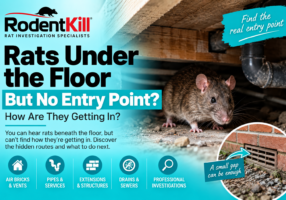
Once rats establish themselves beneath a property, they can remain hidden for months while causing significant damage. They often enter the house through tiny gaps around pipes, damaged air bricks, broken drains or cavities inside walls.
Knowing the warning signs early can help prevent a relatively small problem from developing into a more serious infestation.
In this guide, we'll explain the ten most common signs that rats are living beneath your home and what you should do next.
Why Do Rats Choose the Space Under Houses?
Many UK homes—particularly older properties—have suspended timber floors with a void beneath them. These spaces can provide:
- Protection from predators
- Warmth during colder months
- Easy movement throughout the property
- Access to drains and sewers
- Food sources from kitchens and waste areas
- Water from leaking plumbing
- Undisturbed nesting areas
Modern extensions can also leave concealed voids where rats can establish themselves without being seen.
Sign 1 – Scratching or Running Noises Beneath the Floor
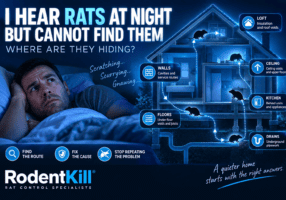
One of the most common signs is hearing scratching, scurrying or running beneath your floors.
Unlike mice, rats are considerably heavier. Some homeowners describe the sound as something moving or walking around beneath the floorboards.
You may notice the noises:
- Late evening
- After dark
- Very early morning
- When the house becomes quiet
Rats are mainly nocturnal and often become more active once the property becomes quiet.
If you are hearing activity beneath your floors, our Rat Entry Investigation can help investigate how rats may be getting beneath the property and where they could be entering.
Sign 2 – A Strong Ammonia Smell
Established rat activity can sometimes produce a strong, unpleasant odour.
Rat urine contains ammonia, which can become increasingly noticeable where rats repeatedly occupy a concealed area.
Homeowners may describe the smell as:
- Damp insulation
- Stale urine
- Sewage
- Rotting vegetation
If rats are living beneath your property, odours may begin entering rooms through floorboard gaps, pipe penetrations or service ducts.
Sign 3 – Rat Droppings Around Air Bricks or Foundations
Discovering rat droppings around the outside of your home can provide useful evidence of activity.
Check around:
- Air bricks
- Drain inspection chambers
- Utility entry points
- Foundation walls
- Patios
- Garden paths
Fresh rat droppings are usually dark brown or black, spindle-shaped and around 15–20mm long.
Multiple fresh droppings can indicate regular rat activity in the area.
Sign 4 – Burrows Beside the House
Brown rats frequently dig burrows alongside buildings.
Common locations include:
- Under decking
- Beneath sheds
- Along foundations
- Around patios
- Beside drains
- Under concrete slabs
Fresh burrows may have relatively smooth entrances with recently disturbed soil.
Where a burrow is close to the building, further investigation may be needed to establish whether it connects with a concealed void beneath the property.
Sign 5 – Pets Showing Unusual Interest
Dogs and cats may sometimes detect rodent activity before it becomes obvious to homeowners.
You may notice your pet:
- Staring at the floor
- Barking at one particular room
- Scratching floorboards
- Sniffing air bricks
- Digging beside foundations
Unusual repeated interest in a particular area can be another clue worth investigating alongside other evidence.
Sign 6 – Gnaw Marks Around Pipework
Rats gnaw regularly because their incisor teeth continue to grow.
Check around:
- Plastic pipes
- Waste pipes
- Cable entry points
- Timber joists
- Air brick surrounds
- Garage walls
Fresh gnaw marks may appear relatively pale before darkening with age.
Why You Should Never Ignore Rats Beneath Your Home
Even if you never actually see a rat, activity beneath your house can potentially cause significant problems.
- Damaged insulation
- Chewed electrical wiring
- Damage to plastic pipework
- Contaminated insulation
- Damage to timber and other materials
- Contamination from urine and droppings
- Fleas and other parasites
- Movement into wall cavities and loft spaces
For this reason, persistent evidence of rats beneath a property should be investigated rather than ignored.
Can Rats Living Under a House Be Coming From the Drains?
Drainage can be one possible source of rats living beneath a property.
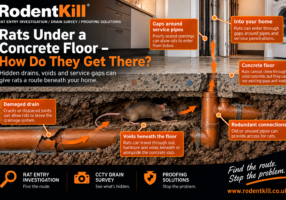
Where underground drainage is damaged, displaced or contains an open or redundant connection, rats may potentially leave the drainage system and reach the ground or concealed voids beneath a building.
However, recurring rat activity beneath a house does not automatically mean the drains are responsible. Structural openings, air bricks, service penetrations and other routes should also be considered.
If recurring rats may be coming from underground drainage, our Professional Rat Drain Survey can inspect accessible drainage for defects and potential rat access routes.
Professional Inspection Makes the Difference
Simply laying poison may control rats that are currently present without identifying how they reached the property.
If rats are entering through defective drains, structural gaps or other openings, new rats may be able to use the same route later.
A professional investigation may assess:
- Potential entry points
- Nesting areas
- Travel routes
- Relevant drainage defects
- Proofing requirements
- Appropriate control options
Sign 7 – Grease Marks Along Walls and Foundations
Rats often move alongside walls, foundations, pipes and other solid objects rather than crossing exposed areas unnecessarily.
As they repeatedly follow the same routes, oils and dirt from their fur can leave dark greasy smears known as rub marks.
Look for these marks around:
- Air bricks
- Foundation walls
- Pipe penetrations
- Garage walls
- Crawl space entrances
- Loft access points
Repeated rub marks can provide useful evidence when considered alongside droppings, footprints and other signs of rat activity.
Sign 8 – Damage to Insulation Beneath the Floor
If your property has accessible floor voids or crawl spaces, disturbed insulation can be another indicator of rat activity.
Rats may pull insulation apart, move through it or use suitable materials for nesting.
Signs include:
- Torn insulation
- Compressed insulation
- Shredded paper or insulation
- Nesting material
- Droppings mixed with insulation
Insulation can also become contaminated with urine and droppings where rodents have been active.
Sign 9 – Increased Rat Sightings Around the Property
Although rats generally prefer concealed routes, increased sightings around a property can indicate significant local activity.
You may begin seeing rats:
- Running along fences
- Crossing patios at dusk
- Near bins
- Around bird feeders
- Entering openings around the building
- Disappearing beneath decking
Seeing a rat during daylight does not by itself reveal the size or cause of an infestation. However, repeated sightings should be considered alongside other evidence.
Sign 10 – Rats Entering the House Through Hidden Gaps
One of the clearest indications of a problem is when rats begin appearing inside the occupied parts of the property.
Once rats have reached a concealed void beneath or within a house, they may find routes into living areas through small openings.
Possible routes include:
- Pipework behind kitchen units
- Boiler pipe penetrations
- Service ducts
- Utility cupboards
- Damaged air bricks
- Gaps associated with suspended floors
Rats can use surprisingly small openings, which is why apparently minor gaps may warrant closer inspection when other evidence supports them.
How Professionals Confirm Rats Are Living Beneath a House
Professional investigation should be based on evidence rather than assuming the first visible gap is responsible.
A thorough investigation may include:
- Inspection of air bricks
- Checking external burrows
- Searching for droppings and rub marks
- Monitoring activity
- Inspection of accessible crawl spaces or floor voids
- Assessment of structural and service openings
- Assessment of proofing defects
- CCTV drain surveys where an underground route is suspected
The aim is to understand where rats are active, how they are moving through the property and, where possible, how they originally gained access.
When Can a CCTV Drain Survey Help?
Where the evidence suggests that rats may be using underground drainage, a CCTV drain survey can help investigate accessible pipework for defects and potential access routes.
A survey may identify:
- Broken or fractured pipes
- Displaced joints
- Root intrusion
- Collapsed sections
- Open or redundant connections
- Other defects that could potentially provide a rat access route
Importantly, finding a drainage defect does not automatically prove that rats are using it. The location and nature of the defect should be considered alongside the rat activity and construction of the property.
How to Prevent Rats Living Under Your House
Prevention should focus on addressing relevant access routes and reducing conditions that encourage rat activity.
Practical measures can include:
- Repair relevant damaged drains.
- Seal appropriate gaps around service pipes.
- Repair or protect damaged air bricks while maintaining necessary ventilation.
- Keep bins securely closed.
- Clear accessible food waste from gardens.
- Avoid leaving excessive bird food on the ground overnight.
- Repair leaking pipework.
- Manage dense vegetation immediately against the building where appropriate.
- Monitor previously affected areas for renewed activity.
When Should You Call a Professional?
If you've noticed one or more of these warning signs, further investigation can help establish whether rats are active beneath the property and how they may be getting there.
Early investigation can also make it easier to identify fresh evidence before travel routes and other signs become less obvious.
For recurring problems, effective control may involve a combination of appropriate treatment, entry-point investigation, proofing and drainage investigation where the evidence supports it.
For more specialist guidance on rats beneath floors, hidden entry points, drainage problems and proofing, visit our Rat Knowledge Centre.
Frequently Asked Questions
Can rats really live underneath houses?
Yes. Suspended timber floors, crawl spaces and sub-floor voids can provide sheltered areas where rats may live or travel.
How do rats get underneath a house?
Possible routes include drainage defects, damaged air bricks, gaps around pipework, structural openings and burrows around the property. The actual route should be established from the available evidence rather than assumed.
Do all rat infestations start in drains?
No. Drainage is one possible route, but rats can also gain access through structural openings, service penetrations, damaged air bricks and other defects.
Will poison solve the problem permanently?
Not necessarily. Rodenticide can form part of an appropriate control programme, but it does not repair an entry point. If the original route remains available, new rats may be able to enter later.
Can rats damage my house?
Yes. Rats can damage insulation, gnaw electrical cables, contaminate concealed areas and sometimes damage plastic pipework and other materials.
Conclusion
If you're hearing noises beneath the floor, finding droppings around your foundations or noticing unusual smells, the evidence is worth investigating.
The place where rat activity becomes noticeable is not necessarily the place where rats originally entered the building.
At RodentKill, our approach focuses on investigating the evidence, understanding the property and identifying credible entry routes. Where appropriate, this can include structural investigation, proofing recommendations and CCTV inspection of accessible drainage.
If you suspect rats are living beneath your property, contact RodentKill to tell us about the problem and discuss the most appropriate investigation.