WE INVESTIGATE WHY RATS KEEP COMING BACK
Rats Keep Coming Back? There Is Usually a Reason
One of the most frustrating rat problems is an infestation that appears to disappear after treatment — only to return weeks or months later.
Baiting and trapping can remove rats already inside a property.
But they cannot necessarily stop another rat entering through the same opening.
Recurring rat activity can be associated with:
- Defective drainage
- Redundant drain connections
- Cracked or displaced drain pipes
- Gaps around soil pipes
- Service ducts
- Pipe penetrations
- Wall cavities
- Sub-floor voids
- Damaged air bricks
- Poor building alterations
- Extensions built over old drainage
- Gaps beneath external structures
- Shared drainage systems
This is why RodentKill approaches difficult infestations differently.
We investigate the route — not just the rat.
Not Every Rat Problem Comes From the Drains
This is important.
Drainage is one possible source of recurring rat infestations — but it isn't the only one.
That is why automatically carrying out a drain survey isn't always the best starting point.
Rats may enter through defects around the structure of the property, utility penetrations, extensions, cavities, roof spaces and numerous other openings.
Our Rat Entry Investigation looks at the whole problem first.
If the evidence indicates that drainage is the likely source, we can then move on to a more detailed CCTV investigation.
Already suspect your drains?
For more specialist guidance on recurring rat problems, hidden entry points, drainage defects and proofing, visit our Rat Knowledge Centre.
Stop Treating the Same Rat Problem Again and Again
If you've already had pest control and the rats keep returning, another round of baiting may not answer the most important question:
Where are they getting in?
A RodentKill Rat Entry Investigation is designed to help find that answer.
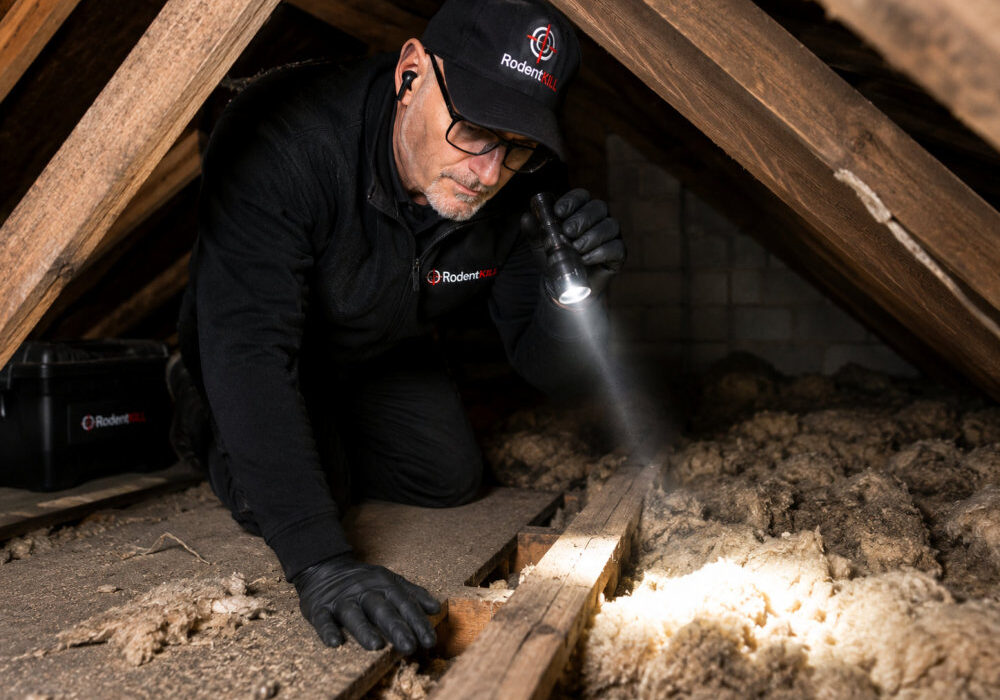

What Is a Rat Entry Investigation?
A Rat Entry Investigation is a detailed inspection designed specifically to answer one question:
How are rats getting into the property?
We look beyond obvious signs of rat activity and investigate the building, surrounding areas and — where appropriate — the drainage system.
The investigation may involve several techniques depending on the property and evidence found.
Property Inspection
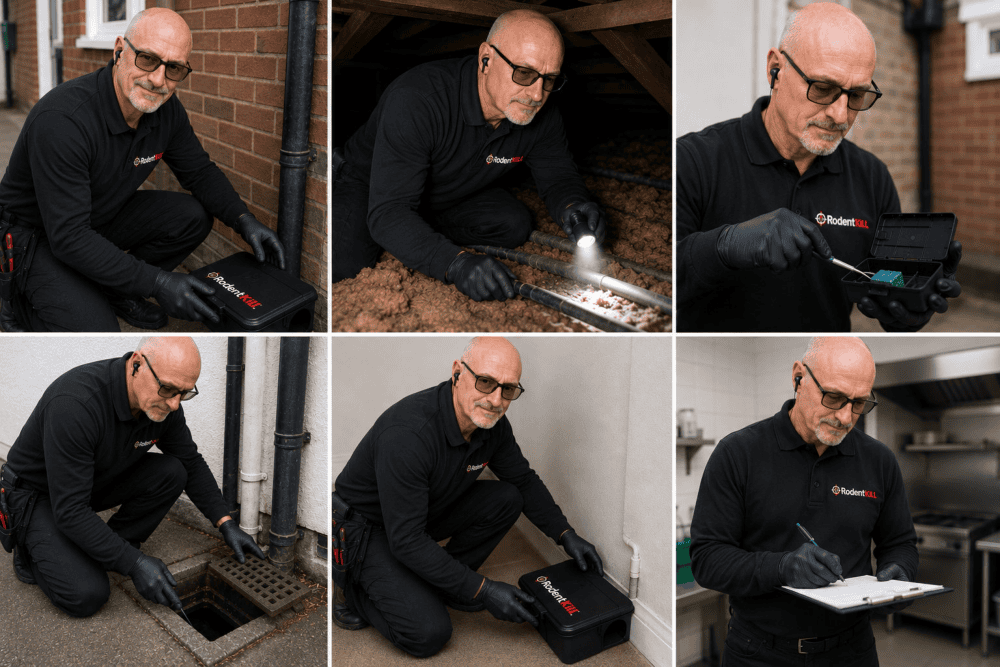
We inspect likely access points around the building, including areas where pipework, drainage and utilities enter the structure.
Rat Activity Assessment
Droppings, gnawing, grease marks, footprints, burrows, noises and other evidence can help establish how rats are moving through the property.
Drainage Assessment
Inspection chambers and accessible drainage may be examined where there is evidence suggesting the infestation could originate underground.
CCTV Rat Drain Survey
Where drainage is suspected, we can recommend or undertake a dedicated Professional Rat Drain Survey using CCTV equipment to inspect hidden drainage.
Entry Point Identification
Evidence from the investigation is combined to establish the most likely entry route or areas requiring further investigation.
Prevention Plan
Once the likely route has been identified, we can explain the appropriate next steps.
These may include proofing, drainage repairs, sealing redundant connections, installing a suitable rat barrier or carrying out further specialist investigation.
Our Rat Investigation Process
1. We Listen to the History
Previous rat problems can provide valuable clues.
We may ask:
- Where have rats been heard?
- Where have droppings appeared?
- Has pest control been carried out previously?
- Did the problem disappear and return?
- Have extensions or alterations been made?
- Are there known drainage problems?
- Are rats being heard beneath floors or inside walls?
2. Inspect the Property
We examine accessible areas where rats could potentially enter or move through the building.
3. Follow the Evidence
Instead of simply looking for holes, we use the pattern of rat activity to help determine where the animals may be travelling.
4. Investigate Suspected Routes
Where necessary this can include inspection of drains, chambers, pipework, cavities and external areas.
5. Identify the Likely Entry Route
Our objective is to narrow the problem down to the most likely source rather than repeatedly treating the symptoms.
6. Recommend a Long-Term Solution
Once the route is understood, we can recommend appropriate corrective action.
When Should You Consider a Rat Entry Investigation?
This service is particularly useful when:
Rats Return After Pest Control
You've already paid for pest control but the problem eventually returns.
Rats Are Heard Under the Floor
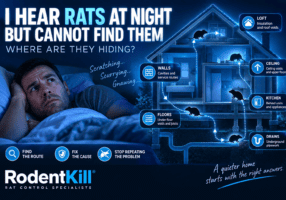
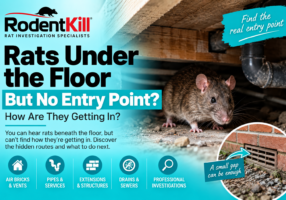
Scratching or movement beneath ground floors can sometimes indicate access from drainage or sub-floor areas.
Rats Are Inside Walls or Cavities
The point where the rat is heard isn't necessarily where it entered.
There Is No Obvious Hole
Some of the most difficult infestations involve hidden access routes.
Rat Activity Appears Suddenly
Especially where there has previously been no obvious external rat problem.
You Have an Older Property
Alterations, redundant drainage, old pipework and structural changes can create unusual access routes.
You've Had Several Pest Controllers
If baiting repeatedly works temporarily but the infestation returns, further investigation may be more valuable than simply repeating the same treatment.
Could Rats Be Coming Through Your Drains?
Yes.
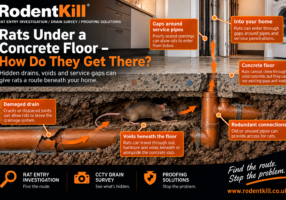
Rats can travel through sewer and drainage systems and exploit defects or openings within private drainage.
Potential problems include:
- Cracked pipes
- Displaced joints
- Redundant connections
- Open-ended pipework
- Damaged inspection chambers
- Poor previous repairs
- Defective junctions
- Connections beneath extensions
- Shared drainage problems
However, finding a drainage defect does not automatically prove that it is the rat's entry route.
The aim is to combine drainage evidence with evidence from the property.
This is what makes a rat-specific investigation different from simply inspecting the condition of a drain.
Rat Entry Investigation vs CCTV Drain Survey
Rat Entry Investigation
Designed to answer:
“How are rats getting into my property?”
It considers the infestation, building, rat behaviour, possible entry points and drainage where relevant.
Designed specifically to investigate:
“Is there a defect or route within my drainage system that rats could be using?”
For difficult recurring infestations, the two services can complement each other.
Finding the Entry Point Can Save Money
Repeated pest control treatments can become expensive.
If rats are continually entering through an unresolved access point, removing one group of rats may simply create space for another.
Finding and correcting the route can therefore be more important than repeatedly treating individual rats.
Our objective is simple:
Find the route. Stop the access. Break the cycle.
Solutions After the Investigation
What happens next depends entirely on what we find.
Possible recommendations could include:
- Professional proofing
- Sealing pipe penetrations
- Repairing structural openings
- Drain repairs
- Sealing redundant drains
- Repairing damaged chambers
- Further CCTV investigation
- Rat barrier or rat flap installation where suitable
- Monitoring
- Targeted rodent control
We don't believe every property needs the same solution.
The investigation determines what should happen next.
Still Dealing With Rats That Keep Coming Back?
If previous treatments haven't solved the problem, we can investigate where the rats are coming from and how they're getting in.
Why Choose RodentKill?
Rat Control and Drainage Investigation Together
A standard drainage survey concentrates primarily on the condition of the drainage system.
A standard pest control visit concentrates primarily on controlling the infestation.
RodentKill brings the two areas together.
We investigate drainage from the perspective of rat behaviour and building entry.
That distinction can be particularly valuable with difficult or recurring infestations.
Root-Cause Approach
Our objective isn't simply to make rat activity disappear temporarily.
We want to understand why it is happening.
Clear Recommendations
Your investigation is carried out by Richard Collings, a trained pest-control professional specialising in recurring rat problems, rat entry investigations and CCTV rat drain surveys.
Frequently Asked Questions
Why do rats keep coming back after pest control?
Pest control may remove rats currently occupying a property without necessarily removing the route that allowed them inside. If an access point remains available, further rats may eventually enter.
Does recurring rat activity mean my drains are damaged?
Not necessarily. Drainage defects are one possible route, but rats can also enter through structural openings, pipe penetrations, cavities and other building defects.
Can you check my drains for rats?
Yes. Where drainage is suspected, a Professional Rat Drain Survey can be carried out using CCTV inspection equipment.
What is the difference between a normal drain survey and a rat drain investigation?
A conventional drain survey primarily examines the condition of the drainage system. A rat-focused investigation considers whether features within the drainage system could form part of a rat's route into the building.
Can you guarantee that you will find the entry point?
No responsible investigation can guarantee that every hidden entry point will be located. Some drainage and structural areas may be inaccessible. However, the purpose of the investigation is to systematically examine the available evidence and identify likely access routes.
Do you carry out rat proofing?
Where suitable, proofing may form part of the recommended solution. More substantial building or drainage repairs may require an appropriate specialist contractor.
Do rat flaps stop rats?
Rat barriers can be extremely useful in suitable drainage systems, but they should not simply be installed without understanding the drainage layout and the likely source of the problem.