
How Rats Get Into UK Homes
Finding a rat inside your home can be alarming. One of the first questions homeowners ask is, "How did it get in?"
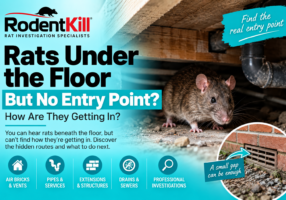
Rats are highly adaptable animals. They can exploit weaknesses in buildings, drainage defects, damaged air bricks, roof openings and surprisingly small gaps that homeowners may never notice.
Through our work investigating rat infestations, we often find that the place where rats are seen is not necessarily where they originally entered the property.
This guide explains how rats can get into UK homes, what signs to look for and how a professional investigation can help identify the source of recurring rat activity.
Why Are Rats Entering Homes?
Rats are generally looking for three basic things:
- Food
- Water
- Shelter
Homes and surrounding gardens can provide all three.
Loft insulation, kitchen cupboards, pet food, leaking pipes and quiet wall or floor voids can provide suitable conditions for rats.
Activity can occur throughout the year, although changes in weather, food availability and local conditions may influence where rats travel and shelter.
How Small a Gap Can a Rat Squeeze Through?
Rats do not necessarily need a large opening to enter a building.
An adult brown rat may be able to squeeze through an opening of around 20mm where the shape and surrounding structure allow it.
Younger animals may be able to use smaller openings.
This means defects around pipes, damaged brickwork, ventilation openings and poorly fitted doors can all be worth investigating where other evidence of rat activity is present.
1. Damaged Drains and Sewers
Underground drainage is one potential route by which rats can reach properties.
Rats can live and travel within sewer networks, which provide sheltered routes, water and access to food waste.
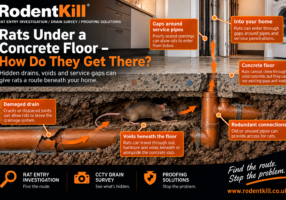
Where private drainage is cracked, displaced, damaged or contains an open or redundant connection, a rat may potentially leave the drainage system and reach surrounding ground or concealed areas beneath a property.
However, finding a drainage defect does not automatically prove that rats are using it. The defect should be considered alongside the location of rat activity and the construction of the building.
Common Drain Defects
- Cracked or fractured pipes
- Displaced joints
- Collapsed drains
- Damaged inspection chambers
- Open or redundant connections
- Poor previous repairs
- Root intrusion
Where the evidence suggests an underground route, a Professional Rat Drain Survey can help investigate accessible drainage for relevant defects and potential rat access routes.
Signs That May Point Towards a Drainage Route
No single sign proves that rats are coming from the drains, but clues that may justify further investigation include:
- Rats appearing inside without an obvious external opening
- Repeated activity following previous treatment
- Burrows close to inspection chambers or drainage routes
- Activity beneath suspended timber floors
- Evidence around drainage covers
- Scratching or movement beneath floors
2. Air Bricks
Air bricks provide important ventilation to suspended timber floors. If they are damaged or contain openings large enough for a rat, they may also provide access to the sub-floor void.
Once beneath a suspended floor, rats may be able to travel through concealed areas and locate additional openings into the property.
Where protection is required, suitable rodent-resistant covers or mesh should be installed without preventing the ventilation the air brick was designed to provide.
3. Gaps Around Pipes
Utility pipes and cables frequently pass through external walls.
Oversized penetrations, deteriorated mortar or previous building work can leave gaps around these services.
Common locations include:
- Gas pipes
- Water pipes
- Boiler pipework
- Waste pipes
- Electrical cable entry points
- Broadband and telecommunications cables
Some openings are concealed behind kitchen units, appliances or cupboards, which can make them difficult to identify without a detailed inspection.
4. Damaged Roofs
Brown rats are capable climbers and can sometimes reach upper parts of buildings using vegetation, fences, pipes and other structures.
Potential roof-level openings include:
- Broken or missing roof tiles
- Damaged soffits
- Loose fascia boards
- Open eaves
- Unprotected vents
- Other defects around the roofline
Lofts can provide sheltered areas with insulation and limited disturbance.
If rat activity is occurring in a loft, the route should be investigated rather than assuming the animals entered directly through the roof.
5. Open Doors and Garage Doors
Not every rat infestation involves a hidden structural defect.
An open garage, side door or other accessible entrance can occasionally allow a rat to enter directly.
This may be more likely where there is already rat activity around gardens, waste-storage areas or neighbouring land.
6. Wall Cavities
Wall cavities and other concealed building voids can provide hidden travel routes once a rat has gained access.
Possible access points can include damaged ventilation openings, structural defects, pipe penetrations and openings associated with building alterations.
Because these spaces are concealed, homeowners may hear movement without seeing the animal itself.
Possible signs include:
- Scratching noises
- Gnawing sounds behind walls
- Noises appearing to move between floors
- Droppings appearing without an obvious nearby opening
- Persistent odours from concealed areas
These signs can indicate rodent activity but do not, by themselves, identify the original entry route.
7. Conservatories and Extensions
Extensions and conservatories can sometimes introduce new junctions between old and new parts of a building.
Openings can occur around drainage alterations, service pipes, floors, foundations and other construction details.
Where rat activity begins following building work, these areas can be particularly useful places to investigate.
Rats may also reach concealed areas beneath an extension through an existing structural or underground route.
8. Burrowing Around Buildings
Brown rats are capable burrowers.
Burrows may be found beneath or alongside:
- Patios
- Sheds
- Decking
- Walls
- Vegetation
- Other sheltered structures
Where burrowing occurs close to a building, further investigation can help establish whether rats have access to a sub-floor void or another opening.
Possible signs include:
- Freshly disturbed soil
- Burrow openings
- Established runs through vegetation
- Droppings near external walls
9. Decking and Garden Structures
The sheltered space beneath decking can provide suitable harbourage for rats, particularly where food or water is also available nearby.
Other potential harbourage areas include:
- Garden sheds
- Log stores
- Compost areas
- Dense vegetation
- Unused greenhouses
- Cluttered storage areas
Finding rats beneath decking does not necessarily mean the decking is their route into the house. Nearby structural openings and drainage should also be considered where appropriate.
10. Damaged Brickwork and Missing Mortar
Age, weathering and previous building work can leave defects in external masonry.
Loose pointing, missing bricks and openings around repairs may provide access where the gap is large enough and leads into a suitable void.
Maintaining external walls and sealing relevant openings can form an important part of rodent proofing.
11. Broken Vent Covers
Ventilation openings and ducts can become vulnerable where protective grilles are damaged or missing.
Any rodent-proofing work around ventilation should use suitable durable materials while maintaining the airflow required by the building or appliance.
Ventilation openings should not simply be sealed without considering their purpose.
12. Shared Drains and Terraced Properties
Many terraced and semi-detached properties have drainage that connects with neighbouring properties before reaching the public sewer.
This can make drainage-related rat investigations more complicated because the relevant route or defect may not be immediately beside the property experiencing the problem.
Where shared drainage is involved, the accessible network and layout may need to be considered rather than concentrating only on one inspection chamber.
A CCTV drain survey can be useful where the evidence suggests that shared or underground drainage may be contributing to recurring rat activity.
How We Find Rat Entry Points
Finding the entry route usually involves looking at the pattern of evidence across the property rather than simply sealing the first visible hole.
At RodentKill, our approach is to investigate why rats are gaining access as well as dealing with the current activity.
Depending on the property, an investigation may include:
- External inspection of the building
- Inspection of air bricks and ventilation openings
- Assessment of accessible drains and inspection chambers
- Checking service and pipe penetrations
- Roof-level assessment where relevant and accessible
- Loft inspection where appropriate
- Garden and external-area assessment
- Searching for burrows, runs and other evidence
- Identifying potential proofing defects
- CCTV drain investigation where the evidence supports an underground route
For a detailed explanation of our investigation process, read How We Find Rat Entry Points.
When Is a CCTV Drain Survey Recommended?
A CCTV drain survey can be particularly useful where there is evidence suggesting that rats may be travelling through underground drainage.
A specialist camera allows accessible pipework to be inspected internally without excavation.
A survey may identify:
- Cracked or fractured drains
- Displaced joints
- Collapsed pipework
- Open or redundant connections
- Root intrusion
- Poor previous repairs
- Other defects that could potentially provide a rat access route
Again, identifying a defect does not automatically establish that rats are using it. The findings should be considered alongside evidence from the property.
If you're unsure whether drainage investigation is appropriate, our guide Do I Need a CCTV Drain Survey for Rats? explains when one may be worthwhile.
How to Prevent Rats Entering Your Home
Effective prevention focuses on reducing suitable access routes and conditions that encourage rat activity.
Practical measures can include:
- Seal appropriate gaps around pipework.
- Repair damaged brickwork.
- Repair or protect damaged air bricks while maintaining ventilation.
- Repair relevant drainage defects.
- Fit suitable drain protection where investigation shows it is appropriate.
- Keep bins securely closed.
- Avoid leaving accessible pet food outside overnight.
- Manage dense vegetation immediately against buildings where appropriate.
- Repair relevant roof defects.
- Investigate recurring activity rather than repeatedly treating it without identifying the route.
Why Treatment Alone May Not Prevent Rats Returning
Traps and rodenticides can form part of an appropriate rat-control programme.
However, controlling the rats currently present does not repair the route they used to enter.
If a credible entry point remains available, further rats may potentially use the same route later.
For recurring problems, long-term control may therefore involve three stages:
- Investigate how rats are gaining access.
- Control the active infestation appropriately.
- Address relevant entry routes, drainage defects or proofing issues.
Read our guide Why Poison Alone Won't Solve a Rat Problem for more information.
Professional Rat Investigation from RodentKill
RodentKill provides specialist Rat Entry Investigations for persistent and recurring rat problems.
Our focus is on examining the evidence, understanding the property and identifying credible access routes.
Where the evidence suggests underground drainage may be involved, we can also carry out a Professional Rat Drain Survey of accessible drainage.
The findings can then be used to recommend appropriate treatment, proofing, drainage repairs or other practical remedial work.
If you've seen rats, heard unexplained activity or have a rat problem that keeps returning, contact RodentKill and tell us what's been happening.
Further Reading
Explore more specialist guidance on recurring rat problems, entry points, drainage and prevention in the RodentKill Rat Knowledge Centre.
For further UK information about pest control and drainage, visit:
Frequently Asked Questions
Can rats climb walls?
Rats are capable climbers and may use rough surfaces, vegetation, pipes, fences and nearby structures to reach higher parts of a building.
Can rats enter through the toilet?
It is possible for rats associated with drainage systems to reach toilet connections, although this is not the explanation for every rat problem. Read Can Rats Enter Through the Toilet? for a detailed explanation.
What attracts rats to houses?
Accessible food, water and shelter can all encourage rat activity. Waste, bird food, pet food, vegetation and sheltered harbourage around a property may contribute.
Should I worry if I see one rat?
A single sighting does not tell you how many rats are present. However, it is worth checking for additional evidence such as droppings, burrows, runs, gnawing or repeated sightings.
Can rats come back after treatment?
Yes. If an access route remains available, further rats may be able to enter after the original infestation has been controlled. This is why recurring problems often benefit from investigation and appropriate proofing.
Conclusion
Rats can exploit a wide variety of openings and concealed routes around UK homes. These may include drainage defects, damaged air bricks, service penetrations, roof-level openings, structural gaps and routes beneath floors.
The location where a rat is seen does not necessarily reveal where it originally entered.
RodentKill specialises in investigating persistent rat problems and identifying credible entry routes rather than relying solely on repeated treatment.
If rats keep returning to your property, contact RodentKill to discuss the problem and the most appropriate investigation.