What is a Rat Drain Survey
If rats keep returning to your property despite repeated pest control treatments, the problem may lie underground.
Many homeowners assume rats are simply entering through gardens, garages or neighbouring properties. However, damaged drainage can sometimes provide a hidden route that allows rats to leave the drainage system and move beneath or into a property.
A professional rat drain survey uses specialist CCTV equipment to inspect underground drains and sewers for defects or connections that could provide potential routes for rats.
Rather than relying only on repeated baiting or trapping, a drain survey can identify drainage defects that may be contributing to a recurring infestation and help determine whether repairs are needed.
If you have recurring rat activity, scratching beneath floors or rodents returning after treatment, a CCTV drain survey may be worth considering when the evidence suggests an underground drainage route could be involved.
At RodentKill, we combine pest-control knowledge with CCTV drain investigation to assess whether drainage defects could be contributing to recurring rat activity.
Contents
- What is a rat drain survey?
- Why rats live in drains
- How rats enter houses through drains
- Signs you need a drain survey
- What equipment is used
- Common defects discovered
- Drain survey process
- What happens after the inspection
- FAQs
What Is a Rat Drain Survey?
A rat drain survey is a specialist CCTV inspection of underground drainage used to identify defects, redundant connections and other potential routes that could allow rats to leave the drainage system.
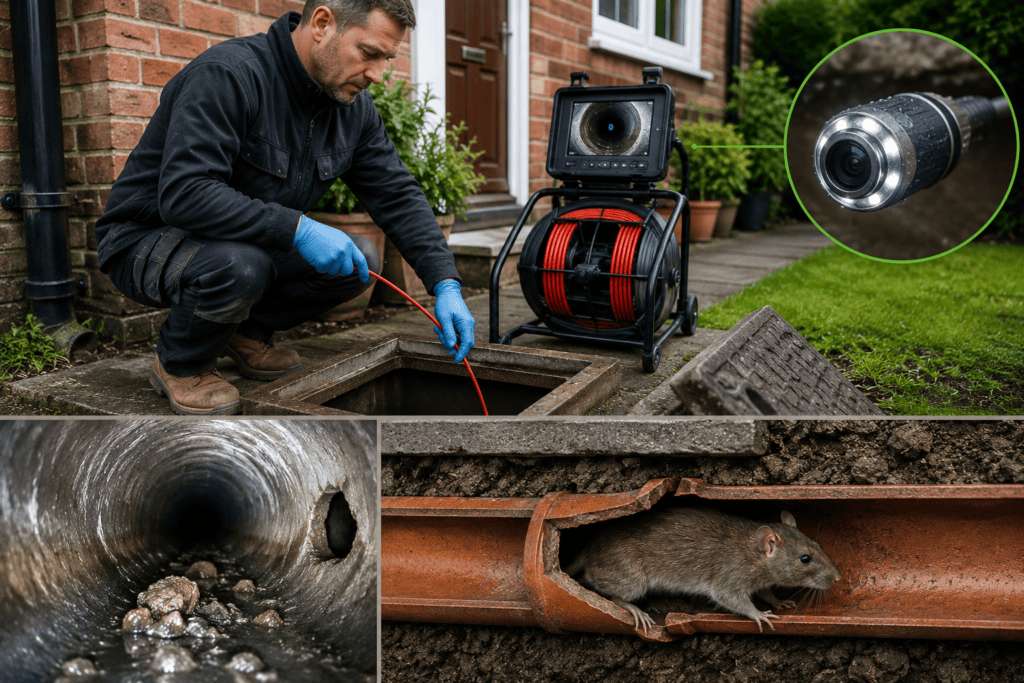
Using high-definition waterproof cameras, accessible sections of drainage can be inspected from inside the pipe.
A survey may identify:
- Cracked drains
- Broken clay pipes
- Displaced joints
- Collapsed sections
- Open connections
- Unused branch pipes
- Poor previous repairs
- Potential rodent entry points
- Evidence of active rat movement
- Overall drain condition
The findings can help establish whether drainage defects are providing a potential route for rats to leave the drainage system and reach the property.
Why Do Rats Live in Drains?
Sewer systems can provide favourable conditions for brown rats, including shelter, water and access to food.
Underground drainage can provide relatively sheltered conditions, moisture and access to food waste entering the sewer network.
Rats living within sewer systems may explore connected drainage while searching for food, shelter and possible exit routes.
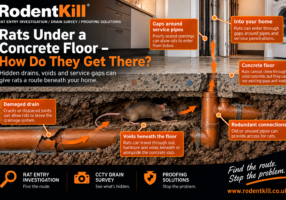
Where damaged private drainage is connected to the sewer network, defects or redundant connections can sometimes provide routes into the ground beneath buildings.
This is one reason recurring rat activity may require investigation beyond simply removing the rats currently present inside a property.
How Rats Enter Houses Through Drains
Brown rats are capable swimmers and climbers and can move considerable distances through connected drainage systems.
While exploring drainage networks, they may encounter defects or connections that provide access outside the pipework.
Potential drainage-related entry routes include:
- Cracked clay drains
- Displaced pipe joints
- Broken inspection chambers
- Unused drainage connections
- Collapsed drains
- Damaged interceptor traps
- Faulty drain repairs
Once outside the drainage system, rats may travel beneath foundations, suspended floors or through service voids before finding an accessible route into the building.
Signs You May Need a Rat Drain Survey
One clue that further investigation may be worthwhile is rat activity returning after previous pest control.
If baiting removes the current population but fresh activity appears weeks later, an unresolved entry route may be allowing new rats to reach the property. In some cases, that route may involve the drainage system.
Warning signs that may justify further investigation include:
- Repeated infestations
- Rats under suspended timber floors
- Scratching beneath kitchens
- Rats appearing near inspection chambers
- Burrows close to drains
- Strong sewer smells
- Sunken paving
- Recurring drain blockages
- Evidence of rat activity around manholes
- Neighbours experiencing similar rat problems
These signs do not prove that the drains are responsible, but they can provide good reason to investigate whether the drainage system is contributing to the problem.
What Equipment Is Used During a Rat Drain Survey?
Professional CCTV drain surveys use equipment specifically designed for underground pipe inspections.
The camera is inserted into the drainage system through a suitable access point, such as an inspection chamber, and advanced through accessible pipework while the operator examines the internal condition of the drain.
This can reveal structural defects and connections that would otherwise remain hidden underground.
Professional survey equipment may include:
- High-definition CCTV drain cameras
- Self-levelling camera heads
- LED camera lighting
- Distance measurement systems
- Drain tracing equipment
- Electronic pipe locators
- Inspection software
- Digital reporting systems
This equipment can help establish the approximate position and depth of significant drainage defects, allowing any necessary investigation or repair work to be planned more effectively.
Common Problems Found During Rat Drain Surveys
Every property and drainage system is different, but several types of defect can be relevant when investigating recurring rat activity.
Cracked Clay Pipes
Older clay drainage can develop cracks, fractures or displaced joints over time.
Where openings are large enough, they may provide a route for rats to leave the drainage system.
Displaced Joints
Ground movement, deterioration or previous drainage work can sometimes result in adjoining sections of pipe becoming displaced.
Where a sufficient opening exists, rats may be able to move through the defect and into the surrounding ground.
Collapsed Drains
Collapsed or severely damaged drainage can expose surrounding soil and create openings through which rats may leave the pipework.
How Is a Rat Drain Survey Carried Out?
A rat drain survey involves passing a specialist CCTV camera through accessible underground drainage while the pipework is inspected for defects, connections and signs that may be relevant to rat activity.
The findings can then be considered alongside the history of the infestation and evidence found around the property.
For a detailed step-by-step explanation, read our Rat Drain Survey Process: What Happens and What We Find.
Can You Actually See Rats During the Survey?
In some cases, live rats may be seen moving through the drainage system during a CCTV inspection.
However, the main purpose of the survey is to inspect the condition and layout of accessible drainage and identify defects or connections that could provide a potential route for rats.
Not seeing a rat on camera does not rule out the drainage system as a possible source of the problem.
What Happens If Damage Is Found?
If the CCTV survey identifies defects that could provide a route for rats to leave the drainage system, several repair options may be available depending on the type and condition of the defect.
Drain Repairs
Where practical, damaged sections of drain may be excavated and replaced with new pipework.
Drain Relining
Some cracks and fractures may be suitable for internal drain lining, potentially avoiding the need for extensive excavation.
Repairing Inspection Chambers
Damaged manholes or inspection chambers may require repair if defects are providing potential rodent access.
Drain Rat Flaps
Where appropriate, a correctly installed rat flap can restrict rats travelling upstream into sections of private drainage while still allowing wastewater to flow in the intended direction.
Not every property or drainage layout is suitable for a rat flap, so the drainage arrangement should be assessed before installation.
Who Is Responsible for Drain Repairs?
Responsibility for drainage repairs depends on the location and status of the affected pipework.
- Drains serving only one property are generally the responsibility of the property owner.
- Shared drainage and lateral drains may fall under the responsibility of the relevant sewerage company.
- Public sewers are generally maintained by the relevant sewerage company.
Because responsibility can vary according to the drainage arrangement, homeowners should check with their local sewerage company where ownership is unclear. Further general guidance is available from Water UK.
Why Poison Alone Often Fails
Rat control can remove animals that are currently active in or around a property, but recurring activity may indicate that an entry route has not been identified.
If a drainage defect is allowing rats to leave the sewer system, baiting or trapping alone will not repair that route.
Where drainage is found to be involved, addressing the relevant defect alongside appropriate pest control can help reduce the risk of rats using the same route again.
Can a CCTV Drain Survey Save Money?
In some cases, a CCTV drain survey can help avoid repeated spending on pest control when an unresolved drainage defect is contributing to the infestation.
Identifying a relevant defect can allow repairs or other remedial work to be targeted at the underlying route rather than repeatedly treating the rats that appear inside the property.
A survey may also reveal drainage defects that require attention for reasons unrelated to rodent activity.
How Can You Reduce the Risk of Rats Entering Through Drains?
Maintaining drainage and addressing relevant defects can help reduce potential routes by which rats may leave underground pipework.
- Repair significant drainage defects when identified.
- Replace damaged inspection chamber covers.
- Avoid disposing of fats, oils and unsuitable waste through the drainage system.
- Keep gullies clear and maintained.
- Investigate signs of deterioration in older drainage where appropriate.
- Consider a CCTV inspection where recurring rat activity suggests drainage may be involved.
- Seal accessible external building entry points.
- Maintain good waste management around the property.
For more specialist guidance on recurring rat problems, drainage defects, hidden entry points and rat proofing, visit our Rat Knowledge Centre.
Why Choose RodentKill?
At RodentKill, we understand that effective rat control goes beyond simply laying bait.
Our approach focuses on investigating why rat activity is occurring rather than relying only on repeated baiting. By combining pest-control knowledge with specialist CCTV drain investigation, we can assess whether drainage defects are contributing to the problem.
Where relevant defects are found, the findings can be used to plan appropriate repairs, proofing or other remedial work.
For details of our specialist service, see our Professional Rat Drain Survey page.
Useful UK Resources
- Water UK – Drainage Responsibilities
- GOV.UK
- British Pest Control Association (BPCA)
- Health and Safety Executive (HSE)
Frequently Asked Questions
What is a rat drain survey?
A rat drain survey is a CCTV inspection of accessible underground drainage used to identify defects, connections and other features that may be relevant to recurring rat activity.
How long does a drain survey take?
The time required depends on the size, accessibility and complexity of the drainage system and the extent of the investigation required.
Can rats break into drains?
Rats can exploit existing cracks, displaced joints, redundant connections and damaged sections of drainage where openings provide sufficient access.
Will a Drain Survey Find Every Problem?
A CCTV survey can identify many defects within accessible drainage, but visibility may be limited by blockages, standing water, restricted access or sections of pipework that cannot be reached by the camera.
Are Older Properties More at Risk?
Older properties may have clay drainage, redundant connections or historic repairs that warrant closer inspection, but the age of a property alone does not mean its drains are defective.
Can rats swim in drains?
Yes. Brown rats are capable swimmers and can move through connected sewer and drainage systems.
Can rats come through the toilet?
Although uncommon, rats can reach toilets in certain circumstances depending on the drainage layout and access available within the system.
Should I Have a Drain Survey Before Replacing Drains?
In most cases, inspecting accessible drainage first can help establish its condition and the approximate location of significant defects before replacement or excavation work is planned.
Do All Recurring Rat Problems Require a Drain Survey?
No. Recurring rat problems can have several causes. A drain survey is most appropriate when the evidence suggests that underground drainage could be providing an entry route.
Can You Install a Rat Flap After the Survey?
Where appropriate, yes. The survey can help determine whether a rat flap is suitable and identify a potential installation point.
Conclusion
If rats keep returning to your property, an unresolved entry route may be contributing to the problem. Where drainage is suspected, a professional rat drain survey can identify defects or connections that may allow rats to leave the drainage system and reach the property.
RodentKill combines pest-control knowledge with CCTV drain investigation to help determine whether drainage defects are contributing to recurring rat activity.
If you suspect rats may be entering through the drainage system, learn more about our Professional Rat Drain Survey service or contact RodentKill to discuss the problem.