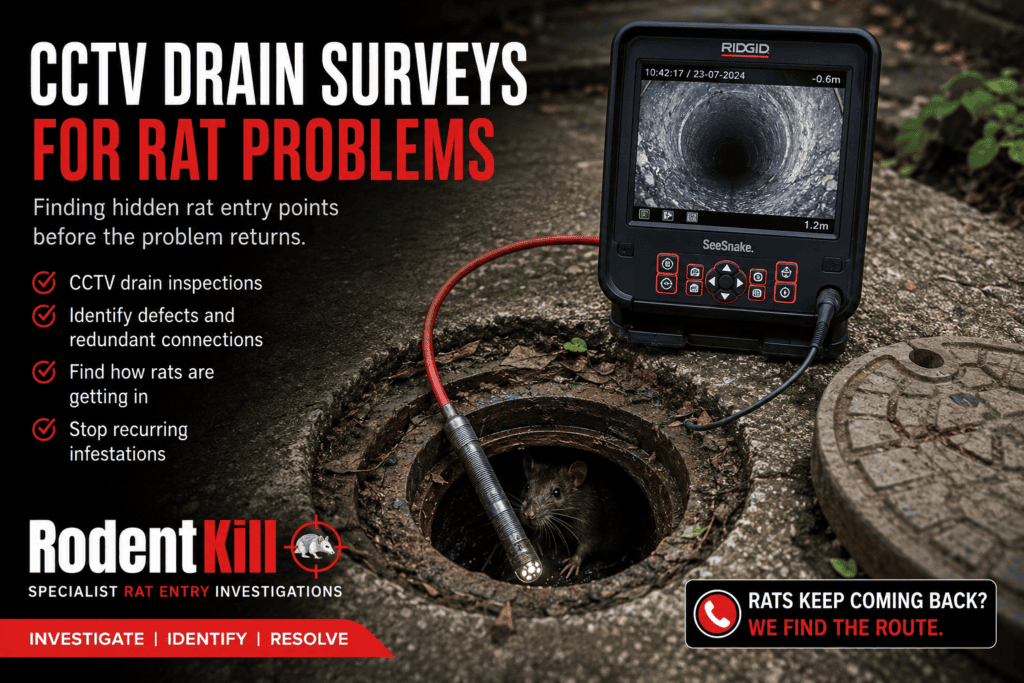
CCTV Drain Survey for Rats: What the Camera Can Find
A CCTV drain survey for rats can reveal defects and hidden connections that may allow rats to leave the drainage system and move beneath a property. However, a camera image alone does not always prove how rats are entering a building. The most useful survey combines drain evidence with signs found inside and around the property.
This guide explains what a rat-focused CCTV survey can find, what it cannot confirm on its own and how the findings should be used to plan the next step.
What Can a CCTV Drain Survey for Rats Find?
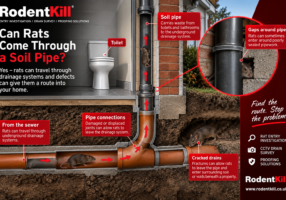
A specialist camera is passed through accessible underground pipework while the operator watches the internal condition of the drain. The aim is not simply to produce footage. It is to identify features that could be relevant to recurring rat activity.
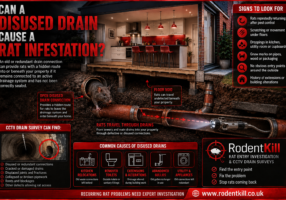
Possible findings include:
- cracked or fractured pipework;
- displaced or open joints;
- redundant branches and uncapped connections;
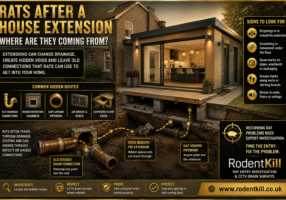
- poorly sealed connections beneath extensions;
- damaged inspection chambers;
- holes, missing sections or severe deformation;
- root intrusion associated with a damaged joint;
- debris, scale or standing water that restricts the camera view;
- routes leading towards the area where activity is being reported.
Sometimes the camera may record a rat inside the drain. More often, the useful evidence is a structural defect or connection that could provide a route out of the system.
If you would like a broader introduction before reading further, see what a rat drain survey is and how it works.
A Drain Defect Is Not Automatically a Rat Entry Route
This distinction matters. Many drainage systems contain minor defects, deposits or signs of age. Their presence does not necessarily mean rats are using them to enter a property.
A relevant defect should be considered alongside its location, direction and connection to the building. For example, an open branch that leads beneath the affected kitchen may be more important than a minor joint defect located away from the property.
The investigation should ask:
- Does the defect create a genuine opening outside the sealed pipe system?
- Where is it located in relation to the reported rat activity?
- Could a rat travel from that point into a floor void, wall cavity or service duct?
- Are there matching signs such as droppings, rub marks, gnawing or disturbed insulation?
- Does the history of the problem support a drainage route?
A survey is most valuable when the camera findings and property evidence support the same explanation.
What CCTV Cannot Prove by Itself
CCTV is an important investigation tool, but it has limits. A camera only shows the sections of drain that can be accessed and successfully viewed.
It may not show:
- the route a rat takes after leaving the drain;
- hidden gaps inside walls or beneath fitted kitchen units;
- the condition of inaccessible, blocked or badly restricted pipework;
- a redundant connection concealed outside the accessible drain run;
- entry points through roofs, air bricks, extensions or service penetrations;
- whether an old defect is currently being used by rats;
- every private or shared connection beyond the agreed survey area.
Not seeing a rat on camera does not mean the drainage system is clear of relevant defects. Equally, seeing a rat in a sewer does not prove that it can enter the building. The route out of the drain is the critical issue.
How Is a Rat-Focused Drain Survey Different?
A general drainage survey usually concentrates on the condition and operation of the pipework. A rat-focused survey also considers how the drainage layout relates to the infestation.
The operator should understand where rats have been seen or heard, when activity occurs and which rooms or voids are affected. This information helps prioritise the drain runs and connections most likely to matter.
A useful investigation may combine:
- CCTV inspection of accessible drains;
- inspection chambers and connection points;
- observations around soil pipes and service entries;
- evidence from kitchens, bathrooms, floor voids or extensions;
- the history of previous pest-control work;
- electronic locating where a defect or connection needs to be positioned.
Where the source is uncertain, a broader rat entry investigation may be the better starting point. This examines the property as a whole rather than assuming the drains are responsible.
How Electronic Sonde Locating Helps
A camera head can carry a small transmitter called a sonde. A compatible receiver is used above ground to locate its approximate position and depth.
This is useful when the footage identifies a defect, open connection or change in direction that needs to be related to the building above. It can help establish whether a suspicious point lies beneath a kitchen, extension, floor void, external path or another relevant area.
Sonde locating does not repair the drain and does not prove that rats are using the defect. It provides location information that helps turn camera footage into a practical repair or investigation plan.
Why Evidence Inside the Property Still Matters
The drain is only one part of the route. If a rat leaves damaged pipework beneath a building, it still needs a pathway into an occupied space.
That pathway might involve a suspended floor, an opening around a service pipe, a wall cavity, a redundant duct or a poorly sealed alteration. Evidence inside the property can therefore help confirm whether the location found during the survey makes sense.
Useful signs may include:
- repeated noise beneath the same floor area;
- droppings appearing in a consistent location;
- activity close to a soil pipe, boxed-in service or utility cupboard;
- disturbed insulation or contamination inside an accessible void;
- damage behind kitchen plinths or around pipe penetrations;
- activity beginning after building work or an extension.
The strongest conclusion is usually based on several pieces of evidence rather than a single image.
When Might a CCTV Drain Survey Be Worthwhile?
A survey may be appropriate when rats keep returning after treatment and there is a reasonable basis for suspecting the drains.
Examples include:
- rat activity beneath ground floors with no obvious external opening;
- noise or evidence close to soil pipes, bathrooms, kitchens or inspection chambers;
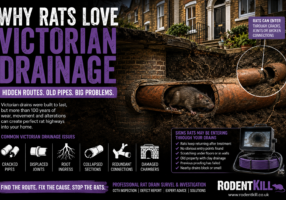
- an older property with altered or poorly documented drainage;
- an extension built over or close to previous drain runs;
- a known history of cracked drains, redundant connections or chamber defects;
- repeated infestations despite trapping, baiting and basic proofing;
- evidence suggesting movement between the sewer system and the building.
Read when you may need a CCTV drain survey for rats for a fuller assessment of the warning signs.
When Might the Drains Not Be the Best Starting Point?
Not every recurring rat problem originates in the drainage system. Rats may enter through damaged air bricks, gaps around utility pipes, defects beneath doors, poorly sealed extensions, roof-level openings or adjoining structures.
A drain survey may not be the first choice when there is clear evidence of an above-ground opening, when activity is confined to a loft or roof, or when the suspected route can already be seen and tested.
Starting with the evidence avoids paying for the wrong investigation. Where the route is unclear, RodentKill can assess the wider property before recommending CCTV work.
What Happens After the Survey?
The next step depends on what the survey finds and how strongly the evidence connects that finding to the infestation.
Recommendations might include:
- repairing or relining damaged pipework;
- properly sealing a redundant branch;
- repairing an inspection chamber;
- carrying out further investigation at a located point;
- proofing the building where rats move from a void into occupied rooms;
- installing a suitable rat blocker where appropriate;
- taking no drain action when the evidence points elsewhere.
Drain repairs, proofing and rat-blocker installation should be quoted separately unless they are expressly included in the agreed service. You can review the current rat investigation and drain-survey prices before making an enquiry.
Questions to Ask Before Booking
- Which drain runs and access points are included?
- Will the survey focus on rat entry rather than drainage condition alone?
- Is electronic sonde locating available if a defect needs positioning?
- Will the findings be explained in relation to the property?
- Are repairs, proofing or blocker installation included or quoted separately?
- What happens if the evidence does not point to the drains?
Frequently Asked Questions
Does a CCTV drain survey always find the rat entry point?
No. It can reveal relevant defects and connections within accessible drains, but the findings must be assessed alongside evidence from the property. The actual route may also involve a hidden void or structural opening.
Do you need to see a rat on the camera?
No. Rats may not be present during the survey. A damaged pipe, open branch or defective chamber can still be significant when its position matches the infestation evidence.
Can a survey inspect every drain?
Only accessible pipework within the agreed scope can be inspected. Blockages, restricted access, severe defects and complex shared systems may limit the survey or require additional work.
Will fitting a rat blocker solve every problem?
No. A blocker must be suitable for the drainage layout and positioned correctly. It will not repair damaged pipes or seal routes that bypass the protected section.
Should I book a drain survey or a full entry investigation?
Choose a drain survey when the evidence already points towards underground drainage. Choose a wider investigation when the source is uncertain or several possible entry routes need to be assessed.
Book a Professional Rat Drain Survey
RodentKill provides professional CCTV rat drain surveys for recurring and unexplained rat problems. The aim is to identify relevant defects, relate them to the property and recommend a practical next step.